Emotional Wellbeing
Day 1 module
Invite responses from the group. Split them into pairs and ask them to share their names and what are emotions, according to their understanding.. This is a timed activity of 3 to 4 minute discussion and sharing after that.. Outcome of this activity is for them to come to the here and now of the presentation and also serve as an icebreaker between the group.
After inviting responses, take them through word by word of the definition of emotion.
What is Emotion?
Emotions are conscious mental reactions (such as anger or fear), subjectively experienced as strong feelings usually directed toward a specific object and typically accompanied by physiological and behavioral changes in the body.
Invite responses for what the participants think are the different types of emotions.
Based on their responses, tell them that all their responses are correct and that whatever they shared would come under the 5 emotions listed in the slide. Check - Check-in with the participants before moving to the next slide.
Different types of emotions
-
Happiness
-
Sadness
-
Anger
-
Disgust
-
Fear
Happiness: Happiness is a feeling of pleasure or satisfaction. People may experience enjoyment when spending time with loved ones, listening to music, or engaging in a hobby.
Sadness: Sadness is a feeling of sorrow or grief. People may experience sadness for different reasons. It could involve losing a loved one, experiencing disappointment, feeling lonely, or going through challenging life events.
Anger: Anger is a feeling of frustration or annoyance. People may experience anger when feeling disrespected, mistreated, or frustrated.
Disgust: Disgust is an emotional response of revulsion to something contagious, offensive, distasteful, or unpleasant. People may experience disgust in various situations, such as encountering something unpleasant or offensive.
Fear: Fear is a powerful emotion that can make a person feel anxious, scared, or panicky.
Invite individual sharing from the participants, as to how they express their emotions. If the group number is 15, split them into 5 groups and assign one emotion per group and ask them to discuss how they will express the emotion they are assigned. For example, 5 groups of A, B, C, D, E are assigned fear, happiness, sadness, anger, and disgust respectively.
It's important that the facilitator goes through each point and if possible, connect with the response of the group from the previous slide.
How to express these emotions?
Activity – Invite participants
-
Fear – Acknowledge your fear and accept it. Talk to someone you trust.
-
Happiness – Smile and laugh. Share your feelings with others. Express gratitude for the experience.
-
Sadness – Allow yourself to feel and process the sadness. Cry if you need to. Talk to someone you trust or visit a professional.
-
Anger – Step away from the situation. Express your feeling calmly and assertively.
-
Disgust – Remove yourself from the experience, if possible. Express your feelings calmly and respectfully. Practice empathy and understanding of the other person’s perspective.
Invite participants to talk about how their body behaves when they express emotions..
Explanation of this slide with disclaimer that this is common amongst all of us and that all physical symptoms/reactions mentioned in the slide needn’t be there to experience the said feeling.
Are emotions physical?
Examples of physical emotions
-
Anger – Hot or flushed face, clenched fists or jaw, shaking, jerky body movements.
-
Happiness – Feeling of lightness in your body, warm heart, “butterflies” in your stomach.
-
Sadness – Feeling of “heartache,” heaviness in your body, tightness in chest, fatigue, drooping face.
-
Shame – Hot face, lowered eyes, sunken body posture.
-
Fear – Dizziness, weakness in legs, goosebumps, fast breathing and heart rate.
Image of how emotions are felt in our body. Disclaimer to be given that this is a general depiction of how we feel our feelings in our body. Responses to be invited from participants
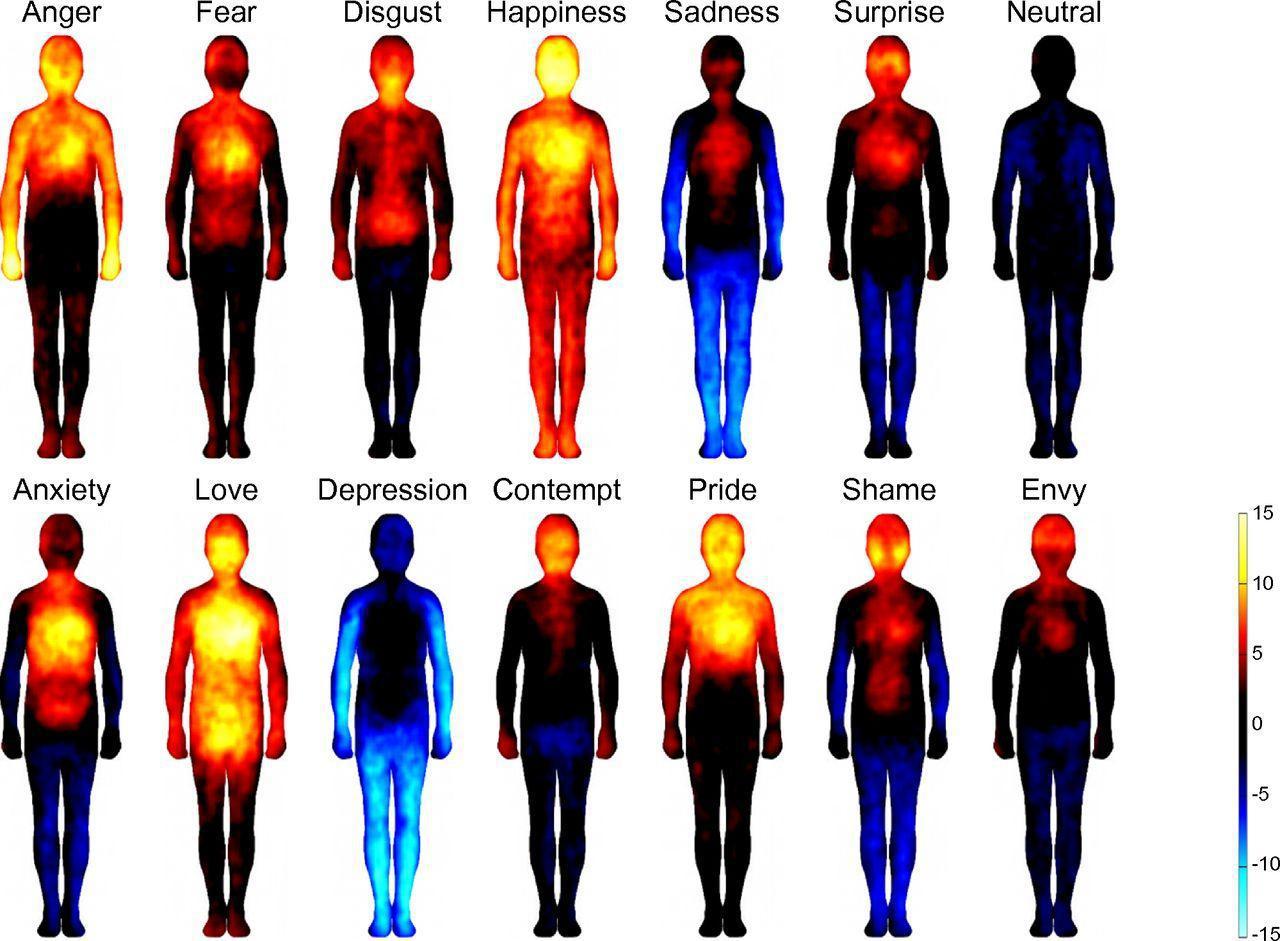
Image of how emotions are felt in our body.
Fight/Flight – Fear – Video
For example, fear activates your “fight or flight” response. You likely feel tense, full of energy, and either ready to fight or run away.
Check in with participants as to how they are. Before playing this video, it is imperative that the participants understand that this is only in the case of fear and not other emotions.
Invite responses from participants on their thoughts on the video played. Check in with participants on the learning of the day. Do a recap. End of Day 1
Day 2 Module
Understanding emotion – Authentic feelings & Substitute feelings
Authentic Feelings
-
Happiness
-
Sadness
-
Anger
-
Fear
-
Disgust
Authentic feelings are feelings that:
-
Are uncensored
-
Are appropriate to the situation
-
Are appropriate as a means of here-and-now problem solving
Activity – Authentic feelings
-
Invite participants to name feelings.
Ask them to evaluate the behaviours leading up to the feelings:
-
If the behaviour settled the feeling.
-
If the behaviour did not settle the feeling.
Substitute Feelings
Substitute feelings are feelings that:
-
Are familiar.
-
Are substitutes for authentic feelings.
-
Were learned and encouraged in childhood.
-
Are experienced in stressful situations.
-
Do nothing towards solving the problem.
Substitute feelings – Consequences
Substitute feelings can sometimes be stored and used up in a different place and time with a different person.
Activity – Substitute feelings
-
Invite examples from real-life situations where they used substitute feelings.
-
Invite them to write down what actually happened.
-
Invite them to write on a piece of paper their desired outcome from that situation.
Recap on Authentic feelings & Substitute feelingsfeelings. End of Day 2.
Day 3 module
Expression of emotions
How to express or communicate how you are feeling?
Activity…
Differences between experiencing emotions and expressing emotions
Do we know when we are going to experience a certain emotion? Can we predict our emotions? Emotions can have physical manifestations, and we can become more aware of our emotions by noticing and being aware of our bodies.
Do we have control over our feelings? Emotions can have a biological basis, and we do not have any control over the way we experience our feelings or emotions.
If we don’t have control over our emotions, is it okay to hit someone when we are angry? We might not have any control over the way we experience our emotions, but we do have control over how we express them.
Emotions – Up and down activity
Day 4 module
Communication of emotions – Communicating without words
Activity…
Common types of non-verbal communication are:
-
Crossing arms in front of someone
-
Placing hands on hips
-
Placing hands over mouth
-
Turning your back to someone
-
Scratching your head
-
Smiling
-
Frowning
Communication of emotions – Using ‘I/You’ statements
While communicating, one must give special attention to the feelings of all the people involved – not just one’s own, but also the person being spoken to. The goal should be to help the other person understand how we are feeling, without hurting their feelings. Often, when we show that we understand the other person’s feelings, they are more likely to understand ours.
Example:
“I understand that you are feeling………, I am just trying to make you understand that by doing/saying………, you made me feel………”
Day 5 module
Communication of emotions – Active listening
What is the difference between hearing and listening?
Hearing is something we do without thinking or trying. We may or may not pay attention or remember it. Listening means paying attention and making an effort to remember and understand what is being said.
Activity – Active listening
Post-activity discussion:
-
How does it feel when someone uses active listening while you are talking? Does it change the way you talk or what you share?
-
Does active listening change anything for you as a listener?
Communication of emotions – Support
If someone is unable to explain their thoughts and feelings despite trying, they should not hesitate to ask for help.
Barriers in effective communication of emotions
What are the barriers?
-
Access to support
-
Taboo around asking for support
-
Past experiences
Support – Identifying support systems
Qualities of supportive people:
-
Approachable
-
Available
-
Reliable
-
Caring
-
Supportive
-
Sensitive
-
Honest
-
Responsible
-
Role model
Overcoming past experiences
Past experiences may not help in the present. Sometimes, these are actually substitute feelings showing up now.